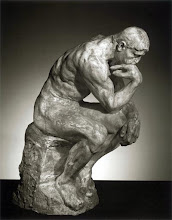
“Nowhere man, please listen.”
-The Beatles
“And as they did eat, Jesus took bread, and blessed, and brake it, and gave to them, and said, Take, eat: this is my body.”
-Common phrasing during church communion ceremonies
A few items about my Sunday morning before we get to the church. I began by lying to my brother. He was visiting for Thanksgiving, and I have not yet told my friends or family about my little project, so I couldn’t tell him the real reason for my going to church. He had to leave to drive home, so I knew he wouldn’t want to go along, so I was able to say I’ve been looking around at churches, conveniently leaving out that I was doing so as an atheist researcher-critic-spy. I’m not exactly “out” as an atheist—not entirely. When the subject comes up among my co-workers or friends, I’ll express my skepticism, or depending on the company, my outright disbelief. But the family is a different issue. Most of them are believing Christians. I’ll have to confront that down the line.
Second item from Sunday morning: as I was lying to my brother, I was watching Fox News Sunday. I had the pleasure of listening to former presidential candidate Mike Huckabee talk about health insurance as though he cared about logic and reason. He will attempt to use logic to fight against the Democratic initiative of providing health care to the poor. However, he will reject logic if it runs counter to the creation story in Genesis. I fondly recall the presidential debate in which he said that he didn’t know about evolution because he wasn’t there when God created the heavens and the earth (http://www.youtube.com/watch?v=n-BFEhkIujA). It’s funny and terrifying to me that this kind of thinker is shaping millions of opinions. But I’m not too worried about another Huckabee presidential run, because a majority of the nation, I trust, realizes it would be a mistake to elect someone who’s an even bigger religious nut than Bush. Also, coincidentally, at the very time I was watching Huckabee on Fox News, four police officers were being shot in Washington State by a career felon that Huckabee had granted clemency to and released from prison as governor of Arkansas. This tragedy will stick with him, I suspect.
Third item from Sunday morning: apparently WCMF does “Breakfast with the Beatles” on Sundays, so my stumbling upon the Beatles three weeks in a row is not divine providence. It’s just a program I was unaware of since only recently have I started doing something on Sunday mornings other than sleep, watch political talk shows, and play video games. (I did those things for years on Sunday mornings before I became an atheist, so don’t be too quick to blame the atheism for my laziness.) Today’s show presented me with “Nowhere Man,” and I think the Beatles’ exhortation to “please listen” is apropos for this morning’s trip.
I was hoping to hear some speaking in tongues, frankly. The website said that the this week’s church (a different Reformed church from last week) has a healing service in the last Sunday of each month, and those who wish can have hands laid upon them for healing. I wanted to see that in person, because when I see it on TV (Sunday mornings, surfing channels during the commercials) it seems staged and unbelievable. Unfortunately, nothing remotely like that took place, so I was confused and disappointed. I intend to seek out and find some faith healers before this project is over.
I was hoping to hear some good Christmas music. I used to genuinely look forward to Advent services; Christmas music really does move the soul. But for the first Sunday in Advent, this was one lifeless place. Yes, they sang some hymns and played the organ, but there was no joy.
I was hoping to hear a sermon with a little more substance than last week’s. So I listened, and determined the truth or falsity of some of the snippets.
This is what I heard. “Jesus was one of us.” True. This was the theme of the sermon, which the pastor repeated to emphasize Jesus’s humanity. Jesus was indeed human.
I also heard this: “Mary, conceived by the Holy Spirit? Yeah, right.” My sentiments exactly. Here, the pastor was conveying the attitudes that must have confronted the young Joseph and Mary when it was discovered the unmarried couple was going to have a child. He avoided coming right out and saying the virgin birth was true or untrue; I couldn’t tell what he believed about it. I imagine he wanted it that way, since it is indeed a touchy subject for any liberal-minded religious leader. Even the Bishop of Oxford admits that it’s not essential for Christians to really believe in the virgin birth (http://www.youtube.com/watch?v=7S--X7n3TxI).
I also heard this: To merchants, Christmas is an opportunity to fill their registers. True. The pastor took the first Sunday in Advent as an opportunity to remind people of the fact that Jesus is the reason for the season. I, too, am somewhat turned off by the rampant materialism in our society, and I don’t mind if churches combat this. Family, fellowship, and a spirit of giving make Christmas a holiday worth keeping.
So there were some parts of the sermon I agreed with. But…
I also heard this: “Satan said ‘yes’ to death, and God said ‘no’ to death.” False. I think this was to illustrate that Jesus rose from the dead, but the speaker introduced Satan out of nowhere at the end of a meandering sermon, so I’m really not sure what this was supposed to mean. Since both are fictional anyway, I’ll move on.
I also heard this: “To many of us, Jesus is a brother and a heartwarming friend.” Perhaps true in people’s minds, but false in reality. We should have relationships with real people, find inspiration in learning, and find comfort in truth.
I also heard this: “Jesus is one of us.” False. Jesus is nowhere, man. This was the dramatic climax of the sermon, in which the speaker transitioned from past tense (“was one of us”) to present tense. His point was to emphasize that Jesus is alive in people’s hearts and minds. Yes, people may believe in Jesus and that might make him real in a metaphysical way, but it’s wish-thinking, so we should ultimately reject it, even if that belief itself does have some positive results.
…Or maybe this is true. Jesus’s molecules may very well be part of us. Mathematicians have estimated the number of molecules that will be part of a given individual’s body and the likelihood that those atoms might be recycled by the environment and end up as part of us. I am not a mathematician, and I don’t necessarily trust all the assumptions made in this calculation, but if it’s anywhere in the ball park, then it’s quite likely that we all contain some atoms that once belonged to Jesus. So I guess Jesus isn’t the nowhere man—more like the everywhere man, though not in the way my church told me when I was little. And now that I think about it, that bread we eat might actually be Jesus’s body. (Judge the math for yourself. It was done for Shakespeare, but the same reasoning would apply to Jesus. http://www.jupiterscientific.org/review/shnecal.html).
Since I was listening so closely, I’ll end with some commentary, not about the substance I heard, but about its presentation. Why do religious leaders need to speak in such an unnatural way? OK, I’m fine if they speak slowly. That’s good practice when speaking publicly. They want people to really hear and think about their words. Good. And I get that they’re impassioned, so emphasizing words and taking dramatic pauses is part of the passion. There’s an element of entertainment in what they do, and they need to keep people listening.
But there are aspects of the speech I’ve heard recently that are just obnoxious. They leave pauses in random places: “This is the (pause) day the Lord (pause) has made. Let us rejoice and be glad (pause) in it.” It’s difficult to recreate in text, but anyone who’s been to a church probably knows what I’m talking about. It’s as though religious speakers need to give additional weight to their words with an affected style of speech. The quotation at the start of this entry about breaking bread is another example. The speaker uses the archaic “brake” for the past tense, rather than “broke.” This is the wording in the King James Bible. I would not have an issue with this, except that nowhere else in the service did he use a King James translation. It’s as though the formal sound of the archaic word “brake” somehow adds extra importance to the act. (Though many people probably thought he was speaking poor English: “He break the bread…”)
I think there’s probably a very logical explanation for the value religious speakers place on an elevated tone. Our brains learn to process language in different tones differently, so a police officer or business executive or salesperson uses a tone suitable for his/her specific purposes. (Can you imagine if your waiter spoke like your priest?) Speech about religious material is sacred by nature, and a tone of high reverence has probably always helped to lend the appropriate weight to those words. I suspect a particular manner of speech has evolved during the thousands of years humans have been telling sacred stories. The extent to which some speakers take this, however, is ridiculous, such that the manner of speaking obscures rather than enhances the meaning of the words. It becomes a distraction. It is a tool by which religious speakers convey that what they say is deep and profound and listeners have been trained to process the tone of voice rather than process the meaning of the words themselves. Caveat: this is certainly not true for all religious leaders. I was married by one who gave intelligent, eloquent sermons in speech that was engaging and unpretentious. But during my first three weeks of the Churchgoing Atheist project, I’ve noticed the affected speech a lot—from the pastors in weeks 2 and 3 and many of the lay people reading prayers or Bible passages.
Thanks for sticking with me on this entry. When you really listen, there’s a lot to talk about, and I intend to keep listening.

